
Application guide
Settings Reference
A step-by-step guide to personal preferences, coins, alerts, MACD controls, security, and administrator settings.
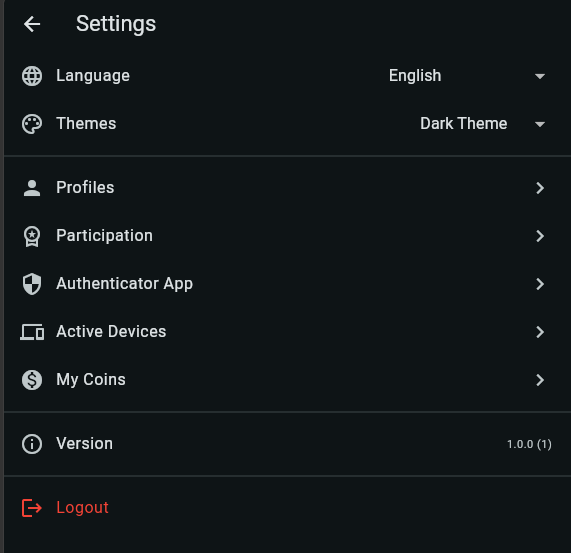
Open Settings and establish your profile
From the Dashboard, open Settings. Start with Profiles: confirm your display name, timezone, and language, then save. The timezone controls how reports, audit timestamps, and chart labels are presented; it does not change timestamps stored by the service.
Change password and protect access
Open Settings → Profiles → Change Password. Enter the current password, a unique replacement password, and confirmation. Use the eye control only when needed, never reuse the password elsewhere, and sign out lost devices from Active Sessions.
Configure My Coins
Open Settings → My Coins and choose Add Coin. Enter the symbol in uppercase, select an autocomplete result from the administrator catalog, and save. Standard users can monitor up to five approved coins. Removing a coin affects future monitoring, not historical records.
Control alert sound
Open Settings → Alert Sounds. Enable or disable Alert sound, use Temporarily mute alerts for a short pause, and use Stop active alert sound to silence playback already in progress. Set Default beep count to control repetition. Browser/device permissions and volume can override these preferences.
Tune MACD Settings
Open Settings → Systems → MACD Settings. Alert Controls let an administrator enable event types such as crossover, profile alignment, direction change, divergence, exit, and Price/OI events. Profile Presets define Early, Setup, Confirm, and Trend periods; change them only with a documented testing plan because they affect scanner and strategy behavior.
Use Systems and Reporting
Open Settings → Systems to review Participation, Reporting, MACD Settings, and administrator-only operational tools. Reporting exposes User Devices and other review surfaces; filter by installation, platform, risk, or date when investigating unusual activity. Keep operational data private and share only with authorized administrators.
Review Trading settings
Administrators can open Settings → Trading to review provider, account, and live-trading controls. Keep live trading disabled while testing, verify the selected tenant and account, and apply independent risk limits before enabling any execution workflow.
Review sessions, authenticator, and devices
Use Active Sessions to identify browser and app logins and revoke anything unfamiliar. Use Authenticator to enroll or disable one-time-code protection and store recovery codes offline. Device and installation records are security evidence, not a replacement for password or MFA hygiene.
Administrator-only areas
Administrator roles can manage users, announcements, application releases, profile presets, alert controls, and audit records. Review before/after values, timestamps, and actor identity for every sensitive action. Standard users must not receive administrator-only state or configuration details.
Check the version, log out, or delete your account
At the bottom of Settings, Version appears immediately before Logout so you can confirm the installed release before ending the session. Permanent account deletion is intentionally grouped with personal account controls: open Settings → Profiles → Delete Account, read the warning, enter your password, and confirm only when you intend to remove the account permanently. Account Deletion Help remains available in Settings if you cannot complete the in-app process.
Finish and verify
After changing a setting, return to the Dashboard and confirm the affected widget reflects the new preference. If a change affects alerts, wait for a test event; if it affects coins or profiles, confirm the selected symbol and profile are visible. Record the change and expected effect when operating a production tenant.